
Holi Festival Photography: Color, Settings, and Storytelling
Mar 14, 2025
Photograph the celebration, not just the powder
The Holi Festival brings together color, movement, and shared celebration. Flying powders, water splashes, and dense crowds can make compelling photographs, but the strongest images also show people, relationships, and the setting. Begin with a clear visual goal: an expressive portrait, the motion of a color throw, or a short story about the celebration.
Plan your position before lifting the camera. Keep pathways clear, follow local and organizer guidance, and avoid interrupting participants for a photograph. Protecting equipment is part of preparation, not a reason to move into an unsuitable position.
Camera settings for color and movement
For active subjects and airborne powder, try a shutter speed around 1/1000 second as a starting point, then inspect your photographs for subject blur and highlight detail. Use continuous autofocus for moving participants and short, purposeful bursts around an expression or gesture. Adjust for the light, subject speed, and the effect you want rather than treating one setting as a festival-wide preset.
A wider aperture can separate a face from a busy background, but leave enough depth of field for the people who matter in the frame. For a group at different distances, stop down as needed and reassess ISO and shutter speed. Check focus on eyes when they are visible, and avoid allowing a nearby powder cloud to become the unintended focus point.
Protect highlight detail and keep color believable
Bright clothing, sunlit skin, and dense powder can produce a difficult exposure range. Review the histogram and highlight warnings after a test frame, especially when the light changes. Do not assume the camera's first exposure choice will preserve every bright area.
If your camera supports RAW capture, it offers flexibility for refining exposure and white balance afterward. Establish a believable starting white balance before increasing saturation, and watch familiar skin tones as well as the powder. Strong color does not require pushing every channel equally.
Make portraits with participation, not interruption
Ask before making a close, posed portrait, and respect a refusal or a person's wish not to be photographed. A smile and a clear gesture can help establish whether someone wants to participate. Be especially considerate around children and families; do not pressure anyone to throw more powder or repeat an uncomfortable action for the camera.
Look for a clean background and enough separation to make an expression readable. A wider frame can tell a different story by including friends, architecture, or the exchange that led to the moment. Avoid treating people or cultural practices as props.
Build a five-image story
- Place: establish the setting and the scale of the gathering.
- Preparation: show hands, color, clothing, or another detail that introduces the activity.
- Action: anticipate a gesture or color throw without directing risky behavior.
- Connection: include a reaction or interaction that gives the action meaning.
- Aftermath: finish with a quieter portrait or detail rather than another near-identical powder cloud.
For short video, record stable clips with a clear beginning and end. Include environmental sound where appropriate, and vary wide, medium, and detail shots so the edit communicates more than a montage of color.
The Challenges of Photographing Holi
Holi's festive environment is characterized by:
Color Powders and Water: Flying particles and splashes require thoughtful equipment preparation. Avoid changing lenses or opening a housing amid powder, spray, or crowds.
Dense Crowds: Keep movement predictable and allow participants space. Choose a position that does not obstruct the celebration or escape routes.
Unpredictable Conditions: Recheck exposure as sun, shade, and airborne color change the scene. Step away to a suitable clean, dry place for equipment adjustments that require opening the setup.

Prepare the equipment for the conditions
Check current installation and care instructions for the exact camera, lens, cover, and port configuration. Inspect assembly and seals before use, confirm which controls remain accessible, and stay within the applicable product rating. Do not assume that a waterproof rating establishes protection against every powder or chemical mixture.
- Protection: Plan for water, airborne particles, and handling conditions without treating a housing as a guarantee against damage.
- Optics: Inspect the front optical surface for contamination. Follow the specified cleaning procedure rather than rubbing powder across it or improvising a solvent.
- Portability: Carry only what you can manage comfortably in the gathering, keeping straps and accessories from catching on people.
- Configuration: Verify the particular camera-and-lens fit rather than assuming that a creator's equipment listing confirms compatibility for your setup.
Real-World Applications:
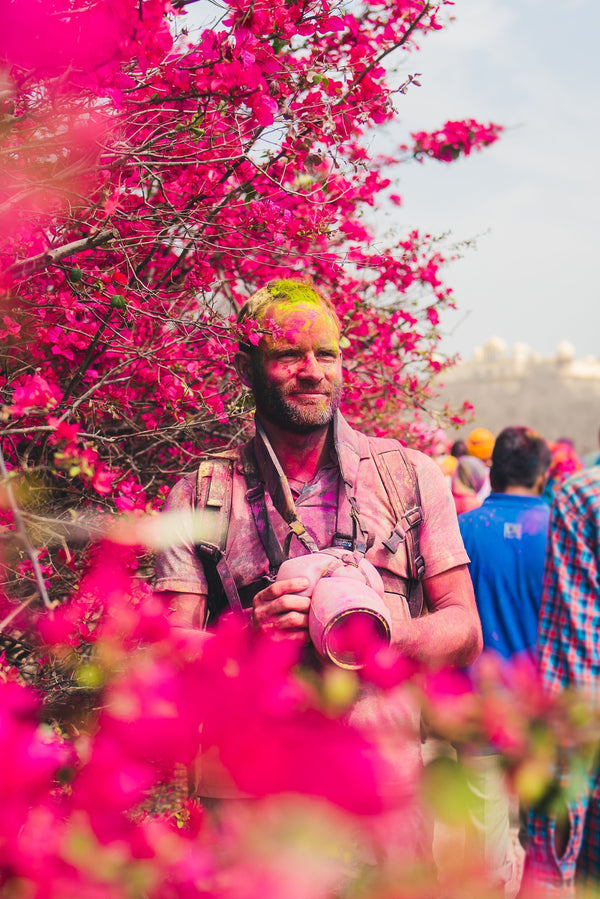
Our existing field story features photographer and former kitesurfer Jamie Hancock using an Outex system with a Panasonic Lumix S1 during Holi. The accompanying Panasonic project provides a production example, not a fit confirmation for other camera-and-lens combinations. See the original story here.

Bring color and human connection together
The most memorable Holi photographs combine timing and color with a clear relationship between people and place. Preserve the expression, make the frame readable, and choose a varied sequence rather than repeating the same spectacle. For broader guidance, see our event and festival photography guide.
The existing documentary below offers additional context for the celebration and Outex field use: