
Damon Loble: Underwater Fine-Art Photography, Light, and Composition
Jun 25, 2025
Make light, composition, and color serve one idea
Underwater fine-art photography starts with an intention, not an equipment list. Decide what the image should express, then make the direction of light, the subject’s gesture, the surrounding space, and the color treatment support that idea. A technically successful frame becomes more compelling when those elements work together.
Damon Loble brings a fine-art sensibility to underwater environments through cinematic compositions and evocative light. This profile preserves his creator story and existing references. The practical sections below are Outex editorial guidance, not a transcript of an interview or newly attributed instructions from Damon.

From Montana Roots to Los Angeles
Born in Montana, Damon relocated to Los Angeles many years ago. Launching his career at 18 in camera store rentals and later at Panavision, he amassed technical knowledge that would shape his photographic identity. Self-described as “a good digital tech,” he returned to photography’s emotional core, driven by his love of light and metaphor. (thephotographicjournal.com)

A Professional Trajectory Built Around Image-Making
Though Damon says he sometimes feels like “just a hobbyist” when commercial work is offered, his trajectory connects technical precision with creative freedom and collaboration. His work as a digital imaging technician (DIT) on commercial shoots brings color correction and cinematic grading into the conversation around his photographic practice.

Signature Style and Split-Level Storytelling
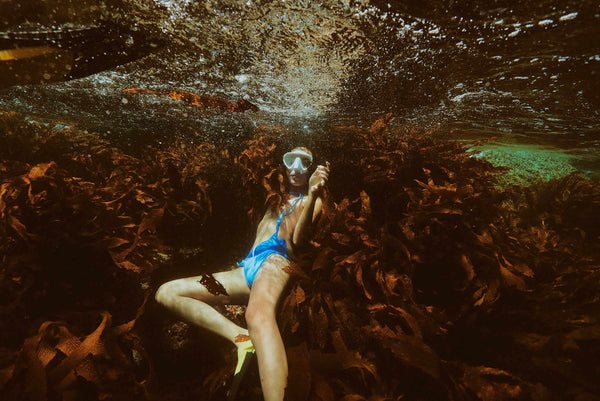
Damon specializes in underwater art nude and lifestyle photography, often exploring split-level, or over-under, imagery. His style evokes the texture and mood of 1970s–80s magazine scans, bringing a nostalgic, painterly sensibility to water-bound scenes. The existing profile includes this quotation attributed to Waterproof Magazine:
“The under‑over or split level image in water photography is a flex… a niche way to tell a visual story.” (waterproofmag.org)
He also photographs divers in open water, exploring themes of control, serenity, and human connection with wild environments. His subjects reflect his interest in authenticity (c-heads.com).

Practical Ways to Develop an Underwater Fine-Art Image
Start with mood and a simple visual brief
Choose a few words that describe the intended mood, then identify the elements that will make it visible: gesture, light direction, negative space, and a restrained color palette. If a prop or costume does not support the idea, simplify the frame rather than adding more.
Test the light before refining the pose
Observe where the subject separates from the background and where highlights become distracting. Review a test frame for facial detail, silhouette, and the relationship between bright water and darker surroundings. Change one lighting variable at a time. If using additional light, use equipment and mounting arrangements suitable for the environment and follow the relevant instructions.
Let composition explain the relationship
Give hands, fabric, and body position space to remain readable. Negative space can suggest calm or isolation; a tighter frame can emphasize gesture and connection. In a split-level image, decide what the above-water portion contributes and what the underwater view adds. Check the horizon and waterline rather than assuming that dividing the frame in half creates a complete story.
Choose focus and motion deliberately
Test how your camera focuses through the assembled setup. A drifting subject, moving fabric, and a relatively still pose can require different shutter-speed and depth-of-field priorities. Inspect actual frames for the details that matter, not just a sharp background. Discuss adjustments with the participant and qualified support team, keeping comfort and communication ahead of a difficult pose.
Use color treatment to support the image
Establish a sensible exposure and white-balance starting point before applying a strong look. Compare familiar tones and important highlights as well as the color of the water. A nostalgic treatment can be intentional without requiring the same saturation or contrast adjustment in every frame. For background, see our underwater white-balance guide.
Continue with the creative photography guide for visual planning, or the portrait photography guide for light, expression, and composition.
Underwater Projects and Creative Exploration
The original profile describes personal and commercial projects, collaborations with dive gear brands, work in locations including Miami and Belize, and split-level exploration in Southern California’s kelp forests. It also traces Damon’s interest in scuba diving to age 15. These details describe the profile’s account, rather than a newly verified schedule of current projects.

Choose Equipment Around the Photograph
The original story identifies Outex as part of Damon’s underwater toolkit. For your own production, match the equipment to the intended image and verify the complete configuration rather than treating a creator’s experience as proof of fit for every camera and lens.
- Camera and lens configuration: Confirm the cover, port, adapters, and accessory openings required for your particular setup.
- Optical preparation: Check test frames for focus, reflections, droplets, and vignetting. Port choice and positioning matter; no configuration should be assumed to guarantee flawless results.
- Supported controls: Test the controls you will need before the session. Do not assume every function remains accessible with every camera-and-lens combination.
- Portability: Account for the actual weight and packed size of the assembled setup, including required accessories.
- Modularity and budget: Identify which mounts, lights, grips, triggers, or tethering connections the production actually needs, and verify suitability before adding them.
Review the camera installation instructions for preparation. If you are choosing equipment, explore the current Camera Pro Kit options and confirm your camera-and-lens configuration before ordering. Follow the applicable rating and care instructions.
Make the Technique Serve the Story
Damon Loble’s profile brings together technical image-making and an expressive response to water. For an underwater fine-art production, the useful question is not simply whether an effect is possible, but whether it supports the image’s meaning. Keep the visual idea clear, review the result, and simplify where needed.
In-water portrait production requires appropriate training, suitable conditions, and qualified supervision where needed. A protective housing does not make a hazardous shooting position safe or replace participant comfort and communication.
Curious to learn more? Explore the existing interview references above and seek out Damon’s work and his conversations in The Photographic Journal and The Underwater Podcast.